
Watering and Harvesting Potted Leaf Lettuce: Check the Soil, Drainage, and Leaves
For leaf lettuce grown in pots on a balcony: check the drainage holes, soil moisture, and plant condition first. When needed, water thoroughly and let the excess drain. Pick outer leaves once they reach a harvestable size, or harvest the whole plant, and watch for bolting in hot weather.
Check the drainage, soil, and plant first
This guide is for leaf lettuce grown in pots on a balcony. Harvest timing depends on the size of individual leaves; the goal is not to form a head. Before picking up the watering can, make sure the pot has clear drainage holes in the bottom. Use a small tool to test the moisture below the soil surface, and see whether the plant is still putting out new leaves and whether it is bolting. Even if the soil surface has lightened in color, probe further to see whether the soil underneath is still moist. Consider the drainage, soil, and plant together before deciding whether to water this time and whether it is time to harvest leaves.
Let current soil moisture guide watering
Leaf lettuce has small, shallow roots, so aim to keep soil moisture fairly steady. If the soil is starting to dry when you check it, water according to its current condition. If it is still moist, keep observing for now. Potted plants usually dry out faster than plants in the ground, but balcony conditions, pots, and growing media vary. Do not copy someone else’s watering schedule or assume the soil feels the same as it did last time. Focus on whether the soil needs water now, rather than watering automatically when a calendar reminder appears.
Watch the drainage after watering thoroughly
When watering is needed, water the soil until water drips from the drainage holes in the bottom of the pot, then let the excess drain away. If no water comes out of the holes, first check whether they are blocked, then check the soil again. Do not assume the soil has been watered thoroughly based only on how much water you poured in. Water coming out of the holes is a sign to watch for during this watering; it does not mean every pot needs the same amount of water. Check the soil’s actual moisture again next time. Keep the drainage holes clear so you can see what happens after watering.
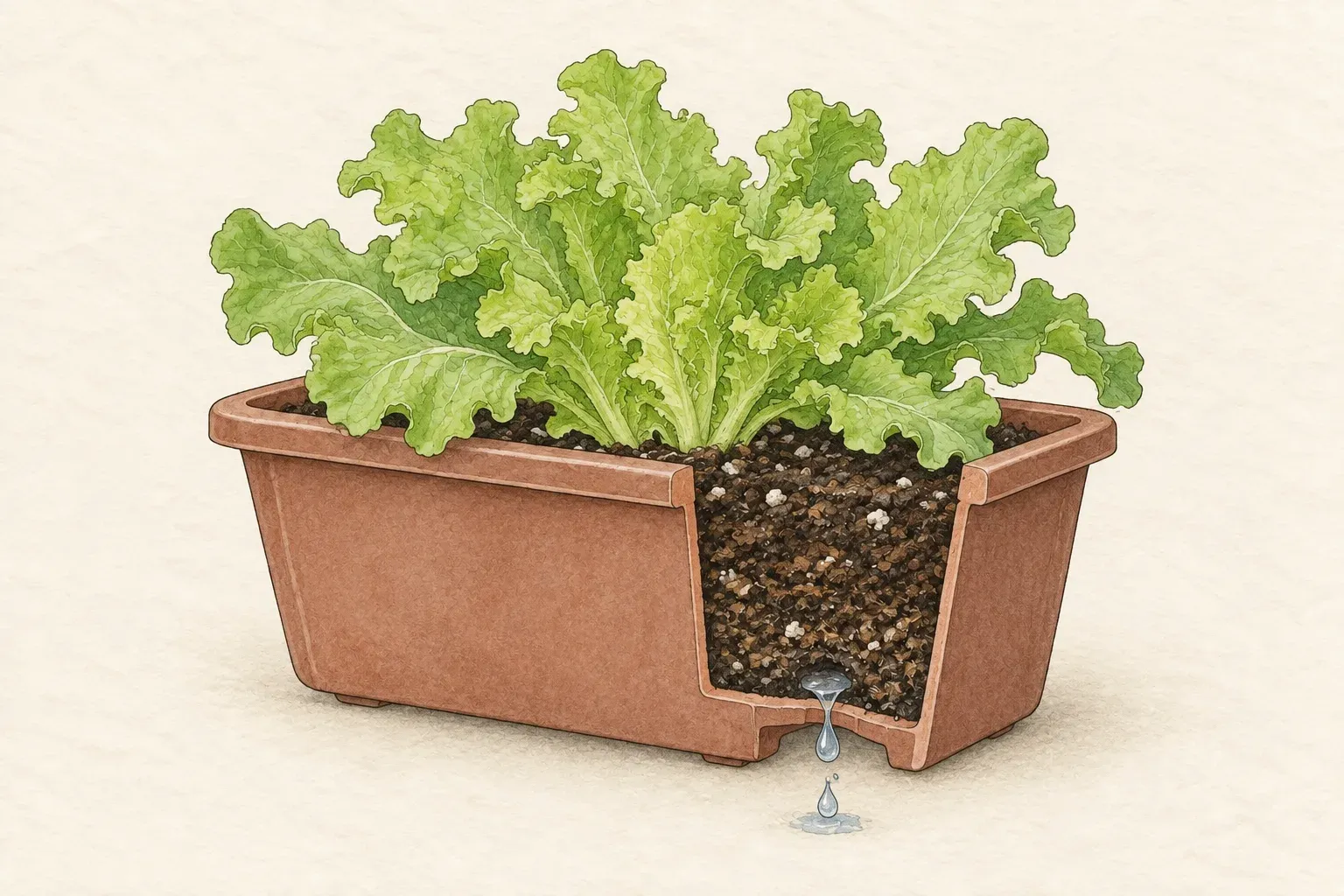
Pots should have clear drainage holes in the bottom. When watering, check whether excess water drains out. The illustration only shows where drainage occurs.
Image credit: simprr 编辑部(Codex imagegen)
Use the size of outer leaves to decide when to harvest
When the outer leaves reach the size you want, pick them from the outside in. Leave most of the smaller leaves and the tender center leaves so the plant can keep growing leaves. If you want to finish this pot’s growing cycle, you can cut off the whole plant close to the soil surface. This way of judging when to pick leaves applies to leaf lettuce; you do not need to wait for the leaves to form a firm head. After picking leaves, continue tending the plant according to the soil’s moisture.
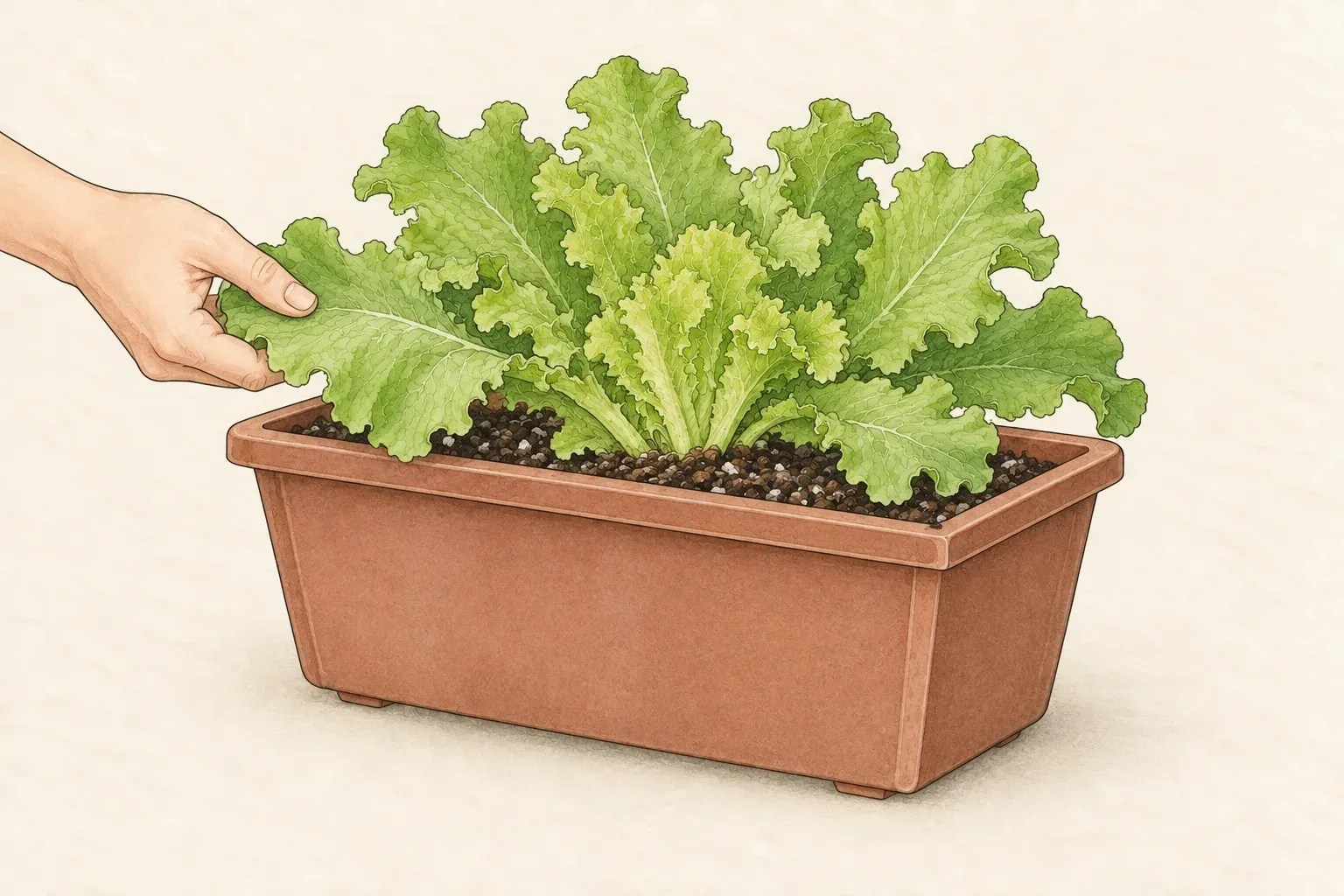
Leaf lettuce can be harvested from the outside based on leaf size, while smaller center leaves are left in place. The illustration only shows where to pick.
Image credit: simprr 编辑部(Codex imagegen)
Reassess when hot weather brings bolting
As the weather gets hotter, watch more closely for slower growth and a flower stalk. Lettuce is more likely to bolt in hot conditions, and its flavor may turn bitter. If you see these changes, consider harvesting leaves sooner or harvesting the whole plant based on the condition of the leaves. You do not have to wait for larger leaves. Balconies differ in temperature and how quickly plants grow, so let the plant in front of you guide harvest timing. If there are no obvious changes yet, keep checking the size of the outer leaves and the soil’s condition before deciding when to harvest.
Sources
- Growing lettuce, endive and radicchio in home gardens — University of Minnesota Extension
- Growing Vegetables in Containers — University of Illinois Extension
- Bulletin #2762, Growing Vegetables in Container Gardens — University of Maine Cooperative Extension